When unusual period symptoms occur, you may be confused, or even alarmed. One of these is a decidual cast, which can look like a large blood clot, but is in fact something very different happening inside your uterus.
Let’s break it down in simple terms so you know what it is, why it happens, and how to recognize it.
What Is a Decidual Cast?
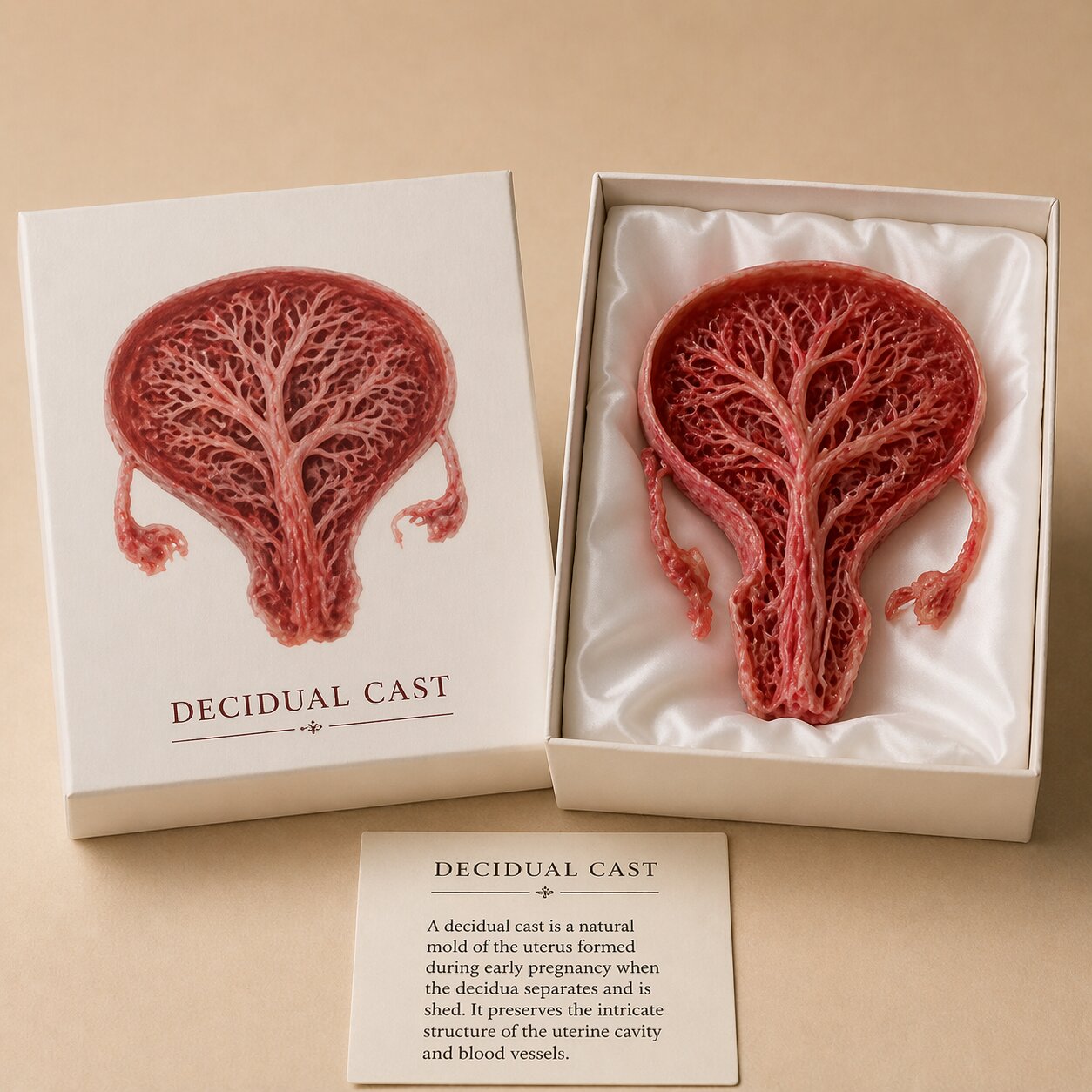
A decidual cast occurs when the lining of the uterus sheds in one complete piece instead of breaking down with normal bleeding.
The tissue, known as the decidua, typically leaves the body in small pieces during menstruation. But occasionally, it comes out all at once, like a solid piece of the uterus.
It often appears:
- Pink, red, or dark brown
- Thick and fleshy in texture
- Shaped like the uterus (triangle or pear-like form)
In medical terms, this condition is known as membranous dysmenorrhea.
Why Does a Decidual Cast Happen?
There isn’t one cause, but doctors have linked the onset of the syndrome to a few factors.
1. Hormonal changes.
Shifts in progesterone levels can affect the way the uterine lining grows and sheds.
2. Hormonal birth control.
Some contraceptives, such as those that contain progesterone, may increase the risk.
3. Pregnancy-related issues.
In rare cases, this may be associated with an ectopic pregnancy, which is a medical emergency.
Even with these links, many cases still do not have a clear explanation.
Decidual Cast vs Blood Clots: What’s the Difference?
Here is the confusion: A decidual cast can be confused for a blood clot, but there are differences.
- Blood Clots (Normal Periods)
- Very jelly-like texture.
- Break apart easily!
- Irregular shapes.
- Mixed with menstrual flow.
- Decidual Cast
- Solid tissue, fully developed and intact.
The uterus of the child (uterus) is also a type of follicle.
If you are having trouble with your headphones in the back or side, you can try this one by listening to the video below.
Comes out as one large piece.
If you notice something unusually shaped or structured, it may not be a normal clot.
Common Symptoms You Might Notice
Before passing a decidual cast, some people experience:
- Severe menstrual cramps
- Pelvic pain
- Heavy bleeding or spotting
- Nausea or dizziness
Once the tissue is passed, pain often reduces quickly.
Is It Dangerous?
In most cases, a decidual cast will not hurt you and will not have a long-term effect on your health.
But because it can sometimes lead to pregnancy complications, you should never ignore it if you’re unsure of the cause.
When Should You See a Doctor?
Seek medical advice if you experience: Sudden severe pain during your period Large tissue passing Very heavy bleeding Symptoms of pregnancy or missed periods.
A simple health check up can rule out serious illness and help ease your mind.
Final Thoughts
If you develop a decidual cast, it may seem like something to be in the news, but this is a rare condition tied to hormonal changes. Most people who experience this cast recover without any complications, but knowing the difference between normal clots and abnormal tissue is important.
When in doubt, always consult a medical professional. Your body is always communicating—and learning to read those signals is the key to better health awareness. Read more: Cursor Dance Party
Faqs
What is a decidual cast in simple words?
A decidual cast is when the entire lining of the uterus sheds in one solid piece instead of coming out gradually during a normal period. It can look unusual and is often mistaken for a large blood clot, but it is actually uterine tissue.
What causes a decidual cast to form?
It is usually linked to hormonal changes, especially shifts in progesterone levels. It can also happen due to certain hormonal birth control methods or, in rare cases, pregnancy-related complications. Sometimes, there is no clear cause at all.
How can I tell the difference between a blood clot and a decidual cast?
Blood clots are usually soft, jelly-like, and break apart easily. A decidual cast, on the other hand, is more solid, shaped like the uterus, and often comes out as one intact piece. Its structure is the main difference.
Should I worry if I pass a decidual cast?
In most cases, it is not dangerous, but it can be alarming. If you experience severe pain, very heavy bleeding, or suspect pregnancy, it’s important to consult a doctor to rule out any serious condition.